Rajasthan-Voyages: agence de voyage locale en Inde
82 answers from our team, based in Jaipur since 2004: seasons, visas, budget, hotels, culture and booking. Type a keyword or choose a topic.
No question matches your search. Ask us yours and we will answer it.
Planning your trip
Season, length, itinerary: the basics for choosing well.
What is the best time to travel to Rajasthan?
The best period runs from October to March: the days are sunny and mild, and the nights are cool in the desert. From April to June it is very hot (often over 40 °C) and the monsoon waters the region from July to September. The Pushkar Fair takes place in the autumn (October or November depending on the year) and the Jaisalmer Desert Festival usually in February.
How many days do you need for a tour of Rajasthan?
Allow 8 to 10 days for the main cities (Jaipur, Jodhpur, Udaipur) and 12 to 17 days to add the Jaisalmer desert, Bikaner, Pushkar or a safari in Ranthambore. Every tour can be shortened, extended or combined with the Golden Triangle (Delhi, Agra, Jaipur). Discover our Rajasthan tours.
What are the must-see sights of Rajasthan?
Jaipur (the Pink City and Amber Fort), Jodhpur (the Blue City and Mehrangarh Fort), Udaipur (the City of Lakes), Jaisalmer (the Golden City at the gateway to the Thar Desert), Pushkar, Bikaner and Ranthambore National Park for tigers. The Hill Forts of Rajasthan (Amber, Jaisalmer, Chittorgarh, Kumbhalgarh, Ranthambore, Gagron), the Jantar Mantar observatory and the walled city of Jaipur are UNESCO World Heritage Sites.
Which itinerary should I choose for a first trip to Rajasthan?
For a first visit, we recommend Jaipur, Pushkar, Udaipur and Jodhpur, with the Taj Mahal in Agra at the start or end of the trip. With two weeks, you can add the Jaisalmer desert and Shekhawati. Our day-by-day examples are on our page Rajasthan itineraries in 10, 15 or 21 days.
How many days do you need for the Golden Triangle?
Allow 6 to 8 days for Delhi, Agra and Jaipur, the three cities of the Golden Triangle. You can then extend it to Ranthambore, Pushkar or Udaipur. See our Golden Triangle tours.
Can you travel in Rajasthan during the monsoon?
Yes, from July to September, if you accept a few showers and high humidity. The landscapes turn green, the lakes of Udaipur fill up and the sites are less crowded. However, Ranthambore National Park is closed during this period. The month-by-month details are in our guide when to go to Rajasthan.
When is the Pushkar Fair?
The Pushkar Camel Fair is held in October or November, around the full moon of the Hindu month of Kartik, so its dates change every year. Accommodation fills up very early. See our page on the Pushkar Fair.
What are the main festivals of Rajasthan?
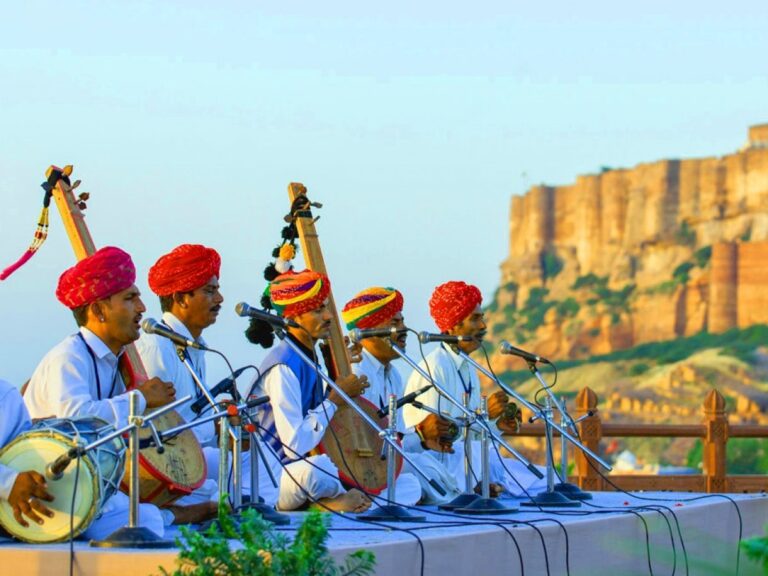
The best known are the Pushkar Fair (autumn), the Jaisalmer Desert Festival (February), Holi, the festival of colours (March), Gangaur in Jaipur (March or April) and Diwali (October or November). The full calendar is on our page fairs and festivals of Rajasthan.
What is the time difference with India?
India is on Indian Standard Time (GMT+5:30) all year round: 5 h 30 ahead of the UK in winter and 4 h 30 in summer, and 4 h 30 ahead of France in winter (3 h 30 in summer). The whole country is on the same time, from Delhi to Kerala.
How far in advance should I book?
For the high season, from November to February, we recommend booking several months in advance: boutique hotels and palaces fill up quickly. For the Pushkar Fair, Holi or Diwali, plan even earlier.
Is Rajasthan suitable for a family trip?
Yes. Forts, palaces, camel rides and safaris are very popular with children. We adapt the pace: less driving each day, hotels with a pool and breaks during the hottest hours. Tell us about your children in your quote request.
Can you go on honeymoon in Rajasthan?
Yes, it is a very romantic destination: nights in palaces, dinners on the shore of Lake Pichola in Udaipur, camping under the stars in the desert. We build your tailor-made trip around your wishes and your pace.
Is Rajasthan suitable for senior travellers?
Yes, as long as the stages are well balanced. We plan reasonable journeys, comfortable hotels, an air-conditioned vehicle with a driver and visits early in the morning or late in the day to avoid the heat.
What should I pack for Rajasthan?
Light clothes that cover the shoulders and knees for temples and mosques, shoes that are easy to take off, a hat and sun protection. From December to February, add a warm layer: the nights are cool, especially in the desert.
Visas, formalities and health
What to do before you leave and good habits on the ground.
Do I need a visa to travel to India?
Yes, most travellers, including British, American and European citizens, must obtain a visa before departure, usually an e-Visa applied for online. Conditions and fees can change: always check the official Government of India website and make sure your passport is valid for at least six months after your arrival.
How do I get an e-Visa for India?
You apply online on the official Government of India website, with a passport photo and the main page of your passport. For a 30-day e-Visa, you apply between 4 and 30 days before arrival. Beware of unofficial websites that charge extra fees.
What is the e-Arrival Card?
Since 1 October 2025, all travellers entering India must fill in an electronic arrival card, in addition to the visa. It is completed online in the days before arrival. Check the latest requirements before you leave.
How long must my passport be valid?
Your passport must be valid for at least six months after your date of arrival in India and have blank pages. Check it before applying for your visa.
Do I need vaccinations to travel to India?
This is a matter for medical advice: consult your doctor or a travel clinic a few weeks before departure, and check the travel advice published by your government.
Do I need travel insurance?
It is not compulsory to enter India, but it is strongly recommended: check that it covers medical costs and repatriation. Your bank card sometimes includes insurance; read the terms carefully.
Can I drink tap water?
No. Drink sealed bottled water or filtered water, and avoid ice in small establishments. In most hotels, bottled water is provided in the room.
How can I avoid stomach problems in India?
Wash your hands often, choose well-cooked dishes served hot, peel your own fruit and go easy on the spices for the first few days. Your driver and our team will point you to reliable places to eat.
Are there mosquitoes in Rajasthan?
Yes, especially during and just after the monsoon, from July to October. Bring a repellent and long clothes for the evenings. For prevention, ask your doctor or a travel clinic for advice.
What should I do if I have a health problem on the ground?
Hotels can call a doctor, and big cities such as Jaipur, Udaipur and Jodhpur have private clinics and hospitals. Our team in Jaipur remains reachable throughout your trip to help you.
Money, budget and tips
Rupees, cards, tipping and bargaining: how to manage your money.
What currency is used in India?
The Indian rupee (INR). Bank cards are accepted in most hotels and large shops; keep some cash for small purchases, tips and markets. You will find cash machines in the big cities.
How much does a trip to Rajasthan cost?
The price depends on the length, the season, the hotel category (boutique, palace or comfort) and the number of travellers. As every trip is tailor-made, we prepare a free, detailed quote, which we adjust with you until it fits your budget.
Should I change money before leaving?
It is not necessary: rupees are hard to obtain outside India. The simplest option is to withdraw cash from machines on arrival or change a little money at the airport, then top up in the big cities.
Should I tip in India?
Tipping is not compulsory, but it is customary for the driver, guides and hotel and restaurant staff. We give you suggested amounts before departure to spare you any embarrassment.
Should I bargain in Rajasthan?
Yes, in the bazaars and with small traders it is the custom, always with a smile. In fixed-price shops and cooperatives, prices are displayed.
What does the price of a tailor-made trip include?
It depends on your plans: accommodation, a vehicle with a driver, visits, guides and the activities you choose. The details of what is and is not included are set out in each quote, which we send you free of charge and with no obligation.
On the ground: transport, hotels and food
How you get around, where you sleep and what you eat.
How do you get around during the tour?
In an air-conditioned vehicle with a driver for most of the stages. Depending on the itinerary, some journeys are made by train or domestic flight, for example between Mumbai and Udaipur or between Khajuraho and Varanasi.
Are the car journeys long?
Rajasthan is vast: between two big cities, you often need 4 to 6 hours on the road. We break up long journeys with interesting stops, such as the Jain temples of Ranakpur between Jodhpur and Udaipur.
Can you take the train in Rajasthan?
Yes. Trains link Delhi, Agra, Jaipur, Jodhpur, Udaipur and Jaisalmer, and a train journey is often one of the best memories of a trip. We include it in your itinerary when it saves time or adds comfort.
What hotels will we stay in?
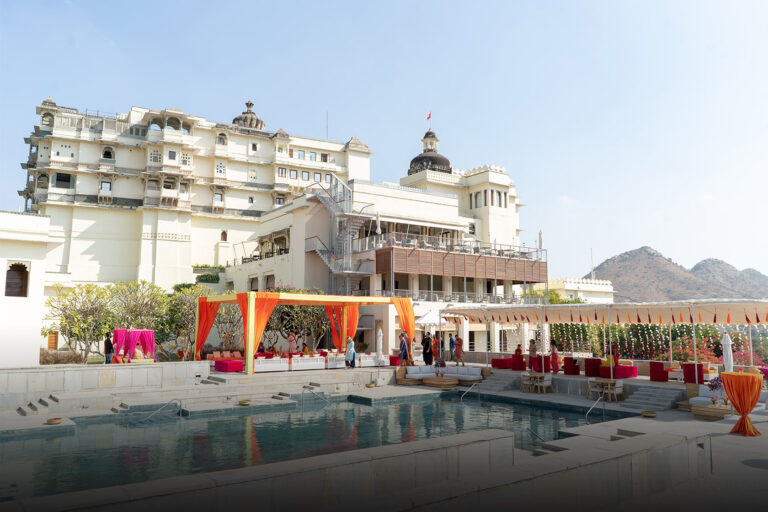
We select boutique and heritage hotels: havelis (former merchants’ mansions), forts and palaces turned into hotels, and comfortable hotels in the big cities. The category depends on your wishes and your budget.
Can you sleep in a palace in Rajasthan?
Yes, it is one of the great experiences of Rajasthan: many Maharajas’ palaces and forts have become hotels, from the simplest to the most luxurious. Let us know if you would like one or more nights of this kind.
Can you spend a night in the desert?
Yes, near Jaisalmer, in the Sam or Khuri dunes: a camel ride at sunset, dinner and a night in a tented camp or under canvas. Bring something warm in winter. See our page on Jaisalmer.
What do people eat in Rajasthan? Is it very spicy?
Rajasthani cuisine is rich and varied: dal baati churma, laal maas (lamb with chilli), ker sangri and many vegetarian dishes. It can be spicy, but just ask for “less spicy”: restaurants are happy to adapt.
Can you drink alcohol in Rajasthan?
Yes, alcohol is permitted in Rajasthan: it is available in hotels, licensed restaurants and authorised shops. A notable exception is the holy city of Pushkar, where alcohol, meat and eggs are prohibited.
How can I get internet access during the trip?
Most hotels have wifi. To be connected everywhere, you can buy an eSIM before you leave or a local SIM card on arrival, on presentation of your passport.
What electrical sockets are used in India?
The power supply is 230 V. Sockets are types C, D and M: thin European plugs (type C) often fit, but a universal adapter is recommended, and travellers from the UK or the US will need one.
Culture, dress and safety
Customs worth knowing to travel with peace of mind and respect.
Is Rajasthan suitable for a woman travelling alone?
Yes, with suitable arrangements: a dedicated driver, carefully chosen hotels and support from our team on the ground. We also offer a women-only trip to Rajasthan.
Is Rajasthan a safe destination?
Rajasthan is a welcoming tourist region. The usual precautions are enough: keep an eye on your belongings in crowds, avoid walking alone late at night and use recognised providers. Also check your government’s travel advice before you leave.
How should I dress to visit temples?
Cover your shoulders and knees, and take off your shoes at the entrance (socks are useful on scorching floors). In some places, such as the dargah in Ajmer or Sikh gurdwaras, you also need to cover your head.
Can you take photos everywhere?
No. Photography is forbidden in some temples and a photo or video fee applies at several monuments. Before photographing someone, always ask for their permission.
How can I avoid scams?
Beware of fake guides, enforced detours to shops and offers that seem too good to be true. When you travel with a local agency, your driver and guides are booked in advance and you know who to turn to.
What language is spoken in Rajasthan?
People speak Hindi and Rajasthani. English is widely understood in hotels, restaurants and tourist sites. A few words of Hindi, such as “namaste” (hello) or “dhanyavad” (thank you), are always appreciated.
What are the rules in Pushkar?
Pushkar is a Hindu holy city: meat, eggs and alcohol are prohibited, you take off your shoes near the lake ghats and public displays of affection are frowned upon. See our page on Pushkar.
Our tours and trips
Tailor-made, small group, guaranteed departures: how we work.
Why choose a local agency for a trip to Rajasthan?
Because you deal directly with the team that organises your trip on the ground. Rajasthan Voyages is the brand of Far Destinations Tours Pvt Ltd, an agency based in Jaipur since 2004 and accredited by IATO: we arrange the hotels, transport and visits ourselves and adapt the itinerary to your wishes, with no middleman between you and the organiser.
How does a tailor-made trip to Rajasthan work?
You tell us your dates, your interests (heritage, nature, spirituality, adventure) and your budget. We propose a tailor-made trip with hotels, private transport and visits, which we refine with you until the final version. To get started, simply fill in the free quote form.
What is the difference between a private trip and a small group tour?
On a private trip, you travel on your own dates, alone or with your loved ones, on an itinerary designed for you. In a small group, you join other travellers on a fixed-date tour, with 12 travellers at most. See our small group tours.
How do guaranteed departures work?
Our four small group tours leave on fixed dates. The departure is guaranteed from 2 booked travellers and each group has 12 travellers at most. Two tours leave from Delhi (Rajasthan 14 days, Rajasthan and the Ganges Valley 19 days) and two from Chennai (South India 13 and 19 days). See the departure calendar.
What does a small group tour include?
Accommodation in boutique or heritage hotels (3 and 4 stars) in a double room, an air-conditioned vehicle, monument entrance fees and taxes. The price is given on request, with a detailed, free quote. See our group tours.
Can I change a tour shown on the website?
Yes. All our private tours serve as a starting point: you can add or remove a stop, change the hotel category or extend your stay. Just tell us in your quote request.
Can I combine Rajasthan with another region of India?
Yes. The most popular combinations are the Golden Triangle (Delhi, Agra, Jaipur), Varanasi and the Ganges Valley, Kerala, Goa and Nepal. Tell us what you would like: we will adapt the itinerary.
Do you organise trips elsewhere in India?
Yes, our team also organises trips throughout India: North India, South India and grand tours of India.
In which language does the trip take place?
The guide’s language depends on the tour: our small group tours in Rajasthan have a French-speaking guide and those in South India an English-speaking guide. For private trips, the guiding languages are specified on each tour page and in your quote.
Rajasthan destinations
What you need to know about the cities and must-see sights.
What is there to see in Jaipur?
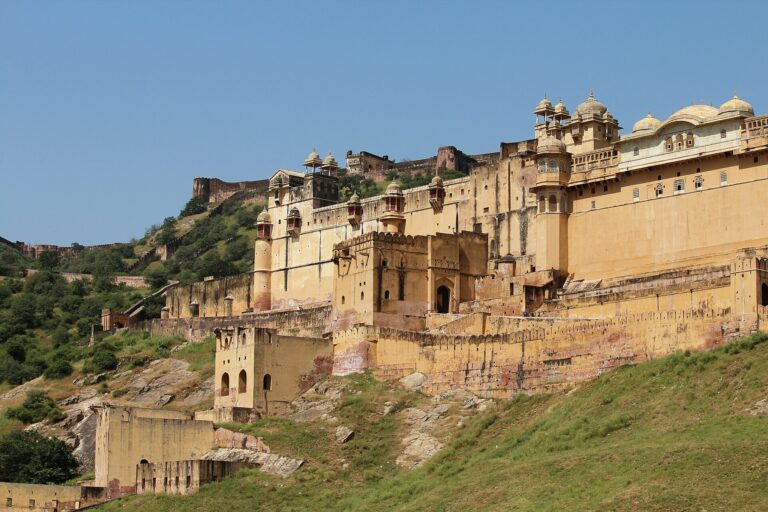
Amber Fort, the City Palace, the Hawa Mahal, the Jantar Mantar observatory and the bazaars of the old city. Allow 2 nights. See our guide to Jaipur.
How long should I stay in Udaipur?
Two nights are ideal for the City Palace, a boat trip on Lake Pichola, the Jagdish temple and a sunset over the lake. See our guide to Udaipur.
Why is Jodhpur called the Blue City?
Much of the old city is painted blue, at the foot of Mehrangarh Fort. According to tradition, the colour marked the homes of Brahmins; it is also said to keep the houses cool. See our guide to Jodhpur.
Is Jaisalmer worth the detour?
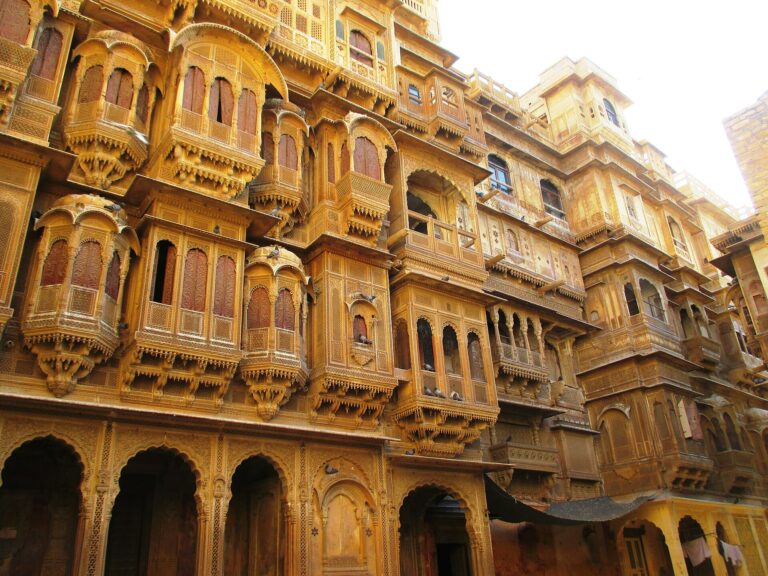
Yes: its golden sandstone citadel, still inhabited, its carved havelis and the nearby dunes make it one of the most memorable stops. Allow at least 2 nights. See our guide to Jaisalmer.
Where can you see tigers in Rajasthan?
In Ranthambore National Park, about 3 hours from Jaipur. Safaris are by jeep or canter, to be booked in advance, and the park is closed during the monsoon. See our page on Ranthambore.
Is the Taj Mahal in Rajasthan?
No, it is in Agra, in the neighbouring state of Uttar Pradesh, about 4 to 5 hours by road from Jaipur. That is why we often combine it with Rajasthan. Please note: the Taj Mahal is closed on Fridays.
What is there to see between Jodhpur and Udaipur?
The carved white marble Jain temples of Ranakpur and the fortress of Kumbhalgarh with its immense ramparts. They break up the journey between the two cities pleasantly.
What is Shekhawati?
A region between Delhi and Bikaner, famous for its fresco-covered havelis, especially in Mandawa. It is an ideal stop to break the journey to the desert.
What is there to see in Bikaner?
Junagarh Fort, one of the best preserved in Rajasthan, the old city and, in Deshnok, the Karni Mata temple. See our page on Bikaner.
Where can I find your city guides?
All our guides are gathered on the page Rajasthan destinations: Jaipur, Udaipur, Jodhpur, Jaisalmer, Pushkar, Ajmer, Bikaner, Chittorgarh, Bharatpur and Alwar.
Activities and experiences
Safaris, nights in the desert, palaces, festivals and workshops: what you can experience on the ground.
Can you go on safari to see tigers?
Yes, in Ranthambore National Park, the best-known reserve in Rajasthan. Safaris are by jeep (6 seats) or canter (around twenty seats), early in the morning or in the afternoon. The main zones of the park close during the monsoon, usually from July to September. See our safari tips.
Where can you see leopards in Rajasthan?
In the Jawai region, between Jodhpur and Udaipur, where leopards live in the granite hills near the villages of Rabari herders. They are spotted by jeep, early in the morning or late in the day.
Can you sleep in the desert?
Yes, in tented camps near Jaisalmer, around the Sam or Khuri dunes: a camel ride at sunset, dinner and music at the camp. One night is enough. See our guide to Jaisalmer.
Can you sleep in a palace?
Yes: many palaces, forts and havelis have become heritage hotels, at every price level. See our tips for sleeping in a palace and our boutique hotels.
Where can you watch birds in Rajasthan?
In Keoladeo National Park in Bharatpur, a UNESCO World Heritage Site, especially from November to February. The Jawai dam lake and the Tal Chhapar sanctuary are also good spots.
Which festivals can you see in Rajasthan?
Holi (the festival of colours, in spring), the Gangaur festival in Jaipur, the Pushkar Fair in autumn, Diwali and the Jaisalmer Desert Festival in winter. The dates change every year: see fairs and festivals of Rajasthan.
Can you take a cooking class?
Yes, in Jaipur, Udaipur or Jodhpur, often in a local home: a visit to the market, preparing Rajasthani dishes and then sharing the meal. We are happy to add it to your tour. See Rajasthani cuisine.
Can you visit craft workshops?
Yes: hand block printing on textiles in Bagru and Sanganer near Jaipur, blue pottery, miniature painting in Udaipur, jewellery and weaving. See our guide to crafts.
Can you combine Rajasthan and South India?
Yes, with a domestic flight to Kerala, Tamil Nadu, Karnataka or Goa. Allow at least three weeks. See combining Rajasthan and South India.
What is there to see off the beaten track?
The painted havelis of Shekhawati, Kota and Bundi in the Hadoti region, the temples of Osian near Jodhpur, the leopards of Jawai or the Sariska reserve. See Kota and around Jodhpur.
The agency and booking
Who we are, how to contact us and how to book.
Is Rajasthan Voyages an accredited agency?
Yes. Rajasthan Voyages is the brand of Far Destinations Tours Pvt Ltd, a travel agency based in Jaipur (Rajasthan) since 2004 and accredited by IATO, the Indian Association of Tour Operators.
How do I request a quote?
Fill in the free quote form with your dates, the number of travellers and your wishes. We will reply with an itinerary and a price, with no obligation. You can also message us on WhatsApp.
How do I book and pay for my trip?
The booking, payment and cancellation terms are set out in your quote and in our booking conditions.
How do I contact Rajasthan Voyages?
Through our contact form, by email at infos@rajasthan-voyages.fr or on WhatsApp.
Where can I read reviews from your travellers?
Our travellers’ reviews are published on our Google listing.
Where is your agency?
Our agency has been based in Jaipur, Rajasthan, since 2004: 405/406, Bhavya Tower, Jaipur 302016. Find out more about our agency.
Still have a question?
Our team will answer you and can prepare a tailor-made itinerary, free of charge and with no obligation.